
01
What do you hear?
The mix feels unclear, the stereo image moves around and the low-end balance changes with your position in the room.
Sekcja wiedzy
Understand how an acoustic panel, broadband absorber and bass trap work, and where the most important listening problems begin.
Room acoustics do not start with a product, but with understanding how energy travels through the room, where it returns to the listener and which surfaces disturb monitoring the most.
01
The mix feels unclear, the stereo image moves around and the low-end balance changes with your position in the room.
02
The direct sound mixes with reflections and energy bouncing from nearby surfaces before you can consciously notice it.
03
First control the first-reflection zones and listening position. Only then judge whether the problem extends deeper into the low range.
Good sound in a room does not happen by accident. It starts with understanding how sound behaves between the walls, ceiling and floor. In an enclosed space, the sound wave does not disappear after leaving the speaker; it reflects, overlaps and builds up.
That is why sound can feel too heavy in one part of the room, too empty in another and unclear elsewhere. The biggest problems usually appear where low-frequency energy builds up and where first reflections disturb direct monitoring.
Understanding these basics helps plan panel placement better and avoid random decisions.
Problem map
In most small and medium rooms, these three areas overlap. Good decisions start with recognizing which one dominates.
01
In the low range, sound can build up unevenly, creating places with too much or too little energy. This is one of the main reasons why bass can sound different depending on the listening position.
02
Reflections from side walls, ceiling and other surfaces reach the listener very quickly and disturb stereo image precision and direct-sound clarity.
03
Too much room decay causes loss of clarity, listening fatigue and a sense of chaos in the room.
Pierwsze odbicia
In a typical room, sound from monitors does not reach the listener only directly. Moments later, reflections from walls, ceiling and floor arrive and overlap with the direct signal.
These reflections disturb the stereo image, reduce mix clarity and make monitoring sound different depending on where you are in the room.
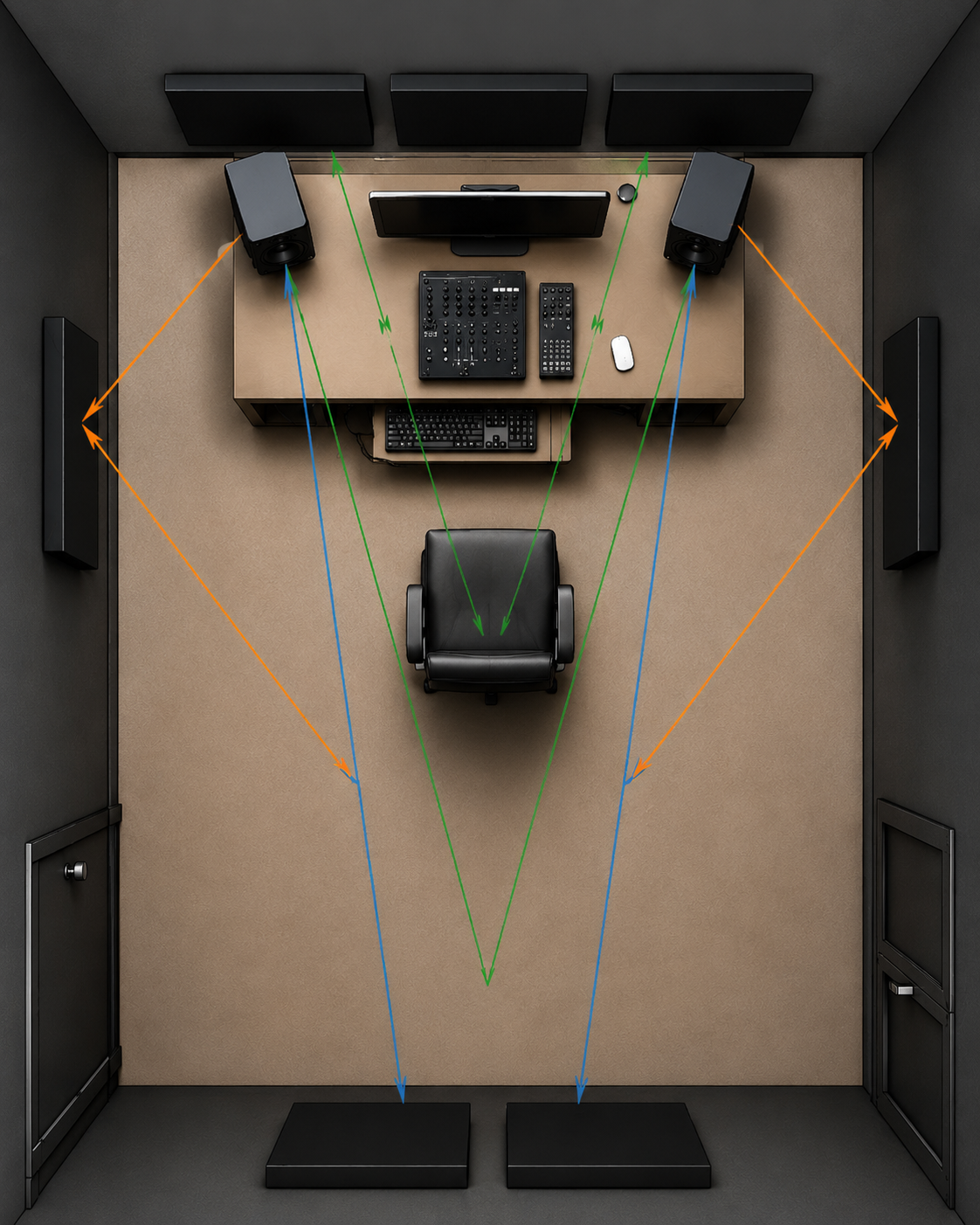
Reflections reach the listener almost as quickly as the direct signal, making space perception and frequency balance unstable.
The best starting point is not random treatment placement, but identifying where the room creates the biggest problems. In practice, this means analyzing the listening position, first-reflection zones and places where low-frequency energy builds up.
The first real treatment step is controlling early reflections with acoustic panels placed in the zones that disturb monitoring the fastest.
Next step
If you want to start with the most commonly chosen line, go to Core. If you need quick support before buying, use panel selection.